Key Takeaways
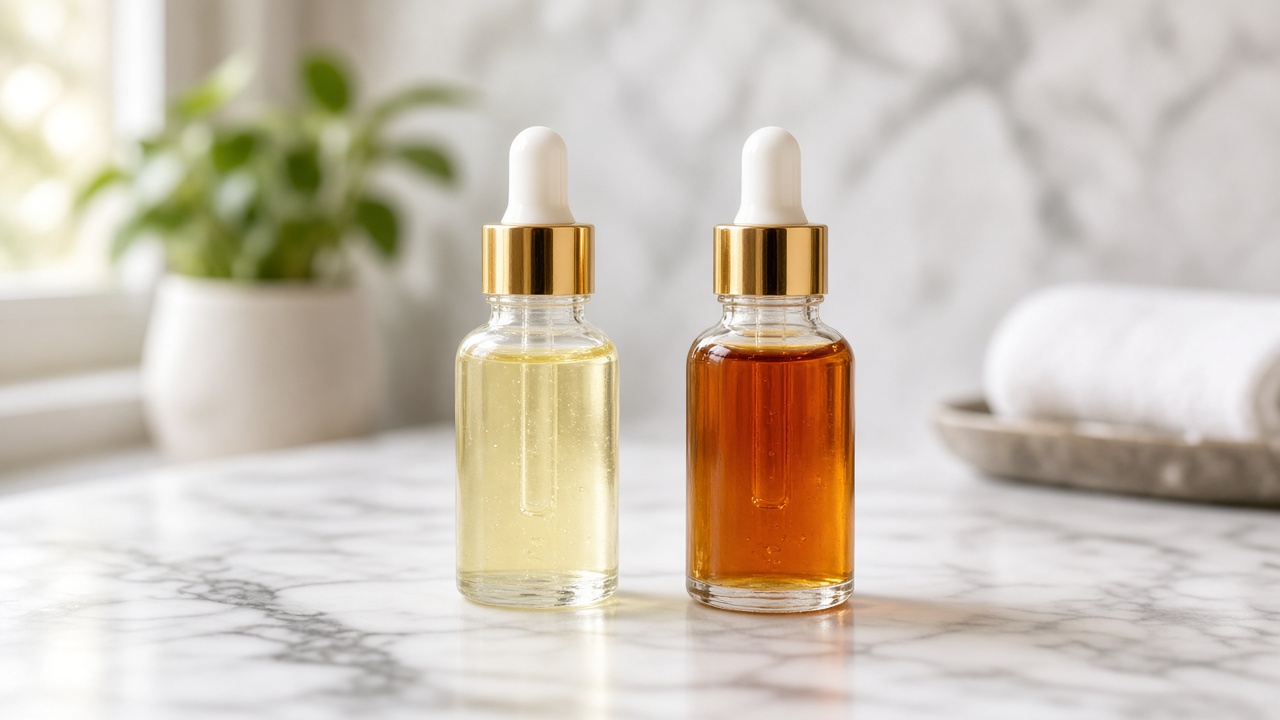
- Orange or brown color is the visible sign that L-ascorbic acid is oxidizing and losing potency.
- Pale yellow can be fine; deep orange/brown, a new metallic smell, or sticky separation is a replace signal for most formulas.
- Overnight orange on skin can come from surface oxidation even when the bottle still looks mostly clear—still use daytime sunscreen with any brightening routine.
- Slow the change with opaque or airless packaging, a cool dark shelf, a tight cap, and finishing the bottle on a realistic timeline.
What the color change actually means
Fresh L-ascorbic acid serums often look clear or lightly straw-colored. As the molecule oxidizes, breakdown products stack up and the liquid shifts yellow → orange → brown, the same family of browning you see when cut fruit sits out.
A useful rule of thumb many educators use:
- Pale / faint yellow: often still within a usable window for a well-made serum.
- Clear jump to orange or brown: treat it as heavily oxidized; replace rather than “use it up.”
- Sudden orange stain on skin or cotton: oxidized byproducts can tint keratin temporarily; the tint fades as skin renews, but it is a warning that the active is reacting hard with air.
People also ask why does vitamin c serum turn yellow first. Yellow is usually the early stage of the same path—not a different problem.
Why L-ascorbic acid is so unstable
L-ascorbic acid is one of the best-studied topical forms of vitamin C for brightening and antioxidant support, and one of the least stable in water. Oxygen, UV light, heat, residual water activity, and trace metal ions all speed the cascade: ascorbic acid → dehydroascorbic acid (partly reversible) → further fragments that no longer behave like vitamin C.
Board-certified dermatologist Zoe Diana Draelos, writing in Dermatology Times, compares the color shift to fruit left on a table—and is blunt about what to do with a bottle that has already browned.
"Cosmetic vitamin C preparations that have discolored should be discarded as they have already oxidized and cannot provide skin benefits."
— Zoe Diana Draelos, M.D., Dermatology Times
That is the practical consumer takeaway: the color is not “just aesthetics.” It is a potency signal for classic water-based ascorbic acid formulas.
Why some labels look different. Stable derivatives (such as ascorbyl glucoside, sodium ascorbyl phosphate, ethyl ascorbic acid, or tetrahexyldecyl ascorbate) and some encapsulated systems oxidize more slowly. They still need good packaging, but they are less likely to race to orange in a few weeks. Evidence and feel on skin are not identical to pure L-ascorbic acid—so “more stable” is not automatically “same results.”
Orange on skin overnight vs orange in the bottle
Two related, but not identical, situations:
- Bottle turned orange. The formula has been oxidizing in storage. Potency is likely down; replace when the shift is obvious.
- Skin looked orange in the morning. High-strength vitamin C can continue reacting with oxygen on the skin surface overnight. Draelos notes that this surface discoloration can show up after nighttime wear even when you started with a fresher bottle—another reason many routines put antioxidant vitamin C in the morning under sunscreen, and save stronger retinoids or acids for night.
Brightening creams that leave an orange cast are often following the same antioxidant pathway. Pair any pigment-targeting routine with daytime SPF: the American Academy of Dermatology reminds readers that effective dark-spot care begins with sunscreen, because new UV and visible light keep pigment active.
"Effective treatment for dark spots and patches begins with sunscreen."
— American Academy of Dermatology
If you are building a fade routine around vitamin C, niacinamide, or other actives, see our sibling guide to the best ingredients for hyperpigmentation—after you confirm the bottle in your hand is still the right color.
Still usable—or time to replace?
Use your senses against how the product looked and smelled on day one:
Brand nuance. A few high-percentage antioxidant brands publicly say a gold or amber shift can still meet their internal potency specs for a stated window. Treat that as a brand-specific claim, not a universal rule for every drugstore dropper. If the brand does not publish that guidance—or the bottle is far past open date—default to Draelos’s discard advice.
| Signal | Usually OK | Replace |
|---|---|---|
| Color | Clear to pale straw; slow deepening | Deep orange, amber-brown, or sudden dark jump |
| Smell | Mild / familiar | Sharp metallic or “off” odor that was not there at open |
| Texture | Smooth, as labeled | Separation, grit, sticky thickening, odd cloudiness |
| Skin feel | Familiar tingles that settle | New sting, redness, or orange residue on cotton |
How to slow oxidation in daily use
You cannot freeze chemistry forever, but you can buy time:
- Prefer opaque and ideally airless or tightly sealed packaging; avoid transferring serum into clear jars.
- Store in a cool, dark place—not a sunny bathroom windowsill. Refrigeration can slow oxidation; it does not stop it.
- Cap tightly after every use; do not leave the dropper sitting open while you do the rest of your routine.
- Note the open date and finish within a realistic window (often weeks to a few months for pure ascorbic acid—follow the label).
- Keep the formula away from heat (car dashboards, steam).
- If you repeatedly lose bottles to orange before halfway, consider a more stable derivative or a smaller size you can finish.
Formulators also lean on low pH, supporting antioxidants (vitamin E, ferulic acid), chelators, anhydrous formats, and encapsulation. Those are lab tools; as a shopper, packaging + color + smell remain your daily checks.
Quick checklist before you repurchase
- Is the color still pale, or has it jumped to orange/brown?
- Did smell or texture change after opening?
- Are you storing it capped, cool, and out of light?
- Will you actually finish this size before it ages out?
- Is daytime SPF 30+ already locked into the same routine?
If oxidation keeps beating you, switch format or size—do not keep pouring brown serum onto dark spots and hoping. For choosing actives that still work when the bottle is fresh, start with the best ingredients for hyperpigmentation list and build a short, sunscreen-backed routine you can stick to.